
Feeling overwhelmed by your workload? Juggling deadlines, meetings, and unexpected tasks can be a daily struggle. This newsletter is packed with practical tips and tricks to help you become a time management and organization master.
Understanding Time Management:
Time management is all about organizing and planning how to divide your time between specific activities. It involves setting goals, prioritizing tasks, scheduling activities, delegating tasks, taking breaks, and using time management tools to improve efficiency and productivity.
Managing time effectively means managing your life efficiently. It’s about getting work done, doing chores, making time for workouts, kids, spouses, ourselves, reading, educating ourselves, and growing.
- Up to 80% of the average working day is spent on activities that do not promote you
- 87% of students could achieve better grades if they had better time management skills.
Practical Tips to Master Time Management:
TIP #1: Track Your Time:
- See where your time goes for a few days. This will help you identify areas for improvement.
TIP #2: Managing Your Inbox:
- Batch Approach: Instead of checking email constantly, schedule dedicated times for responding to messages. This minimizes distractions and allows you to focus on other tasks.
- Utilize Filters and Labels: Organize your inbox by category (urgent, important, follow-up) to prioritize and easily find what you need.
- Unsubscribe: Don’t let unnecessary emails clutter your inbox. Unsubscribe from promotions or lists you no longer read.
TIP #3: To-Do List:
- Prioritize: Not all tasks are created equal. Use a system like the Eisenhower Matrix to categorize tasks by urgency and importance. (Details later at the end of the article)
- Break it Down: Large, overwhelming tasks can be paralyzing. Break them down into smaller, more manageable steps.
- The Power of “No”: Learning to politely decline extra tasks when your plate is full is essential for time management.
TIP #4: Optimize Your Workspace:
- Declutter Your Desk: A clean desk helps you think clearly.
- Silence the Distractions: Turn off notifications and silence your phone when focusing on important tasks. Turn off non-essential notifications, close unnecessary tabs on your computer, and communicate with colleagues when necessary.
TIP #5: Take care of Yourself
- Schedule Breaks: Short breaks throughout the day can improve focus.
- Done is Better Than Perfect: Don’t get bogged down striving for perfection. Just get things done and move on.
- Reward Yourself: Celebrate your accomplishments to stay motivated.
- Practice the Pomodoro Technique. (Details later at the end of the article)
TIP # 6: Plan Your Day
- Write it Down: List the most important things you need to do each day.
- Focus on What Matters: Focus on the most important tasks first. Rate each task and give it a number, 0-10. Stop spending your day on your 2s and 3s. Plan ahead and focus on your 9s and 10s.
- Review and Reflect: Regularly review your progress and reflect on what’s working well and what needs improvement.
TIP # 7: Manage Your Stress
- Breathe Easy: Take deep breaths when feeling overwhelmed.
- Move your body: Take short walks during breaks or participate in exercise classes before or after work. Example: Join a lunchtime yoga class or go for a brisk walk outside to clear your mind and boost energy levels.
- Practice Gratitude: Be grateful for the good things in your life.
TIP # 8: Utilize Helpful Tools
- Calendar Apps: Schedule events, deadlines, and appointments and Task Management Apps: Organize and track your to-do list.
- Centralize Your Schedule: Use your calendar app for everything – meetings, deadlines, appointments, personal events, even coffee breaks with colleagues. This creates a single source of truth for your entire schedule.
- Color Coding and Labels: Assign colors or labels to different categories of events (work meetings, personal appointments) for easy visual identification and prioritization.
- Prioritize: Use prioritization features within your task management app (e.g., star system, numbering) to identify and focus on the most important tasks first.
- Sync Across Devices: Ensure your apps are synced across all your devices
By implementing these practical tips and tricks, you can enhance your time management skills and become more efficient and productive in the office. Remember that mastering time management is an ongoing process, so stay committed to refining your strategies over time.
I’ve discussed two powerful time management tools: the Pomodoro Technique and the Eisenhower Matrix. Let’s explore how these tools can assist you in overcoming your workload effortlessly.
The Pomodoro Technique

Developed by Francesco Cirillo, the Pomodoro Technique is a simple yet effective method to boost productivity.
- Choose a Task: Pick a task you want to tackle.
- Set a Timer: Set a timer for 25 minutes (known as a Pomodoro).
- Work Intensely: Focus solely on your task until the timer rings.
- Take a Short Break: Enjoy a 5-minute break to recharge.
- Repeat: Start another Pomodoro and continue the cycle.
- Take a Longer Break: After four Pomodoros, take a longer break to rejuvenate.
This technique harnesses the brain’s natural rhythm of focus and rest, boosting productivity while preventing burnout and distractions.
The Eisenhower Matrix
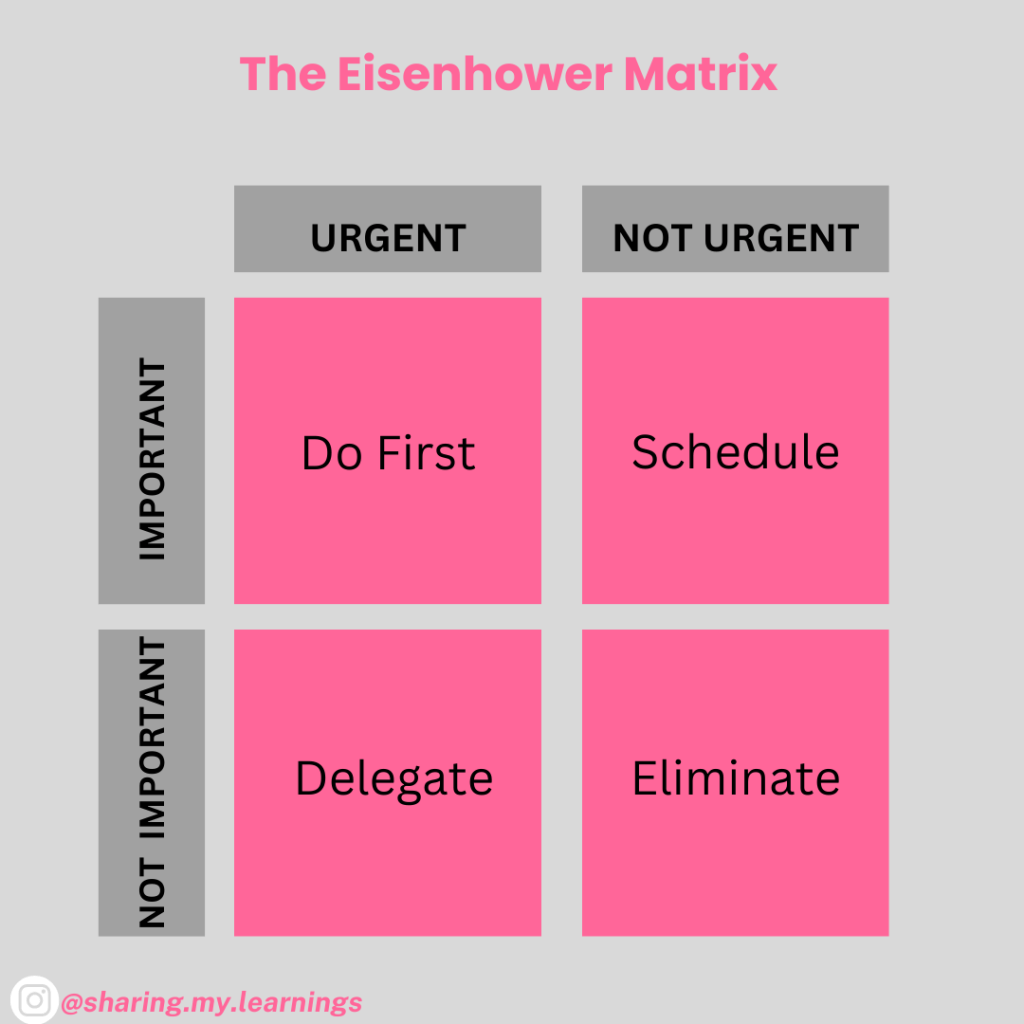
Also known as the Urgent-Important Matrix, this tool helps you prioritize tasks based on urgency and importance. Here’s how it works:
- Quadrant 1 (Do First): Tasks that are urgent and important.
- Quadrant 2 (Schedule): Important but not urgent tasks.
- Quadrant 3 (Delegate): Urgent but not important tasks.
- Quadrant 4 (Eliminate): Not urgent and not important tasks.
By categorizing tasks into these quadrants, you can make informed decisions about where to focus your time and energy.
Putting It Into Action:
- Prioritize tasks in Quadrants 1 and 2,
- schedule tasks in Quadrant 2,
- delegate tasks in Quadrant 3,
- and eliminate or minimize tasks in Quadrant 4.
By utilizing these techniques, you can streamline your workflow, increase productivity, and reduce stress.
 Simi Joshi - Freelance Digital Marketer, Mentor, Workshop Facilitator & Career Coach
Leave a comment